
TB-500 and Thymosin Beta-4: Understanding the Scientific Connection

By Shaun · Published November 14, 2026 · 14 min read
Listen to this article
Device narration · estimated timeline
Device narration · voice quality depends on your browser and installed voices.
Quick Answer
Thymosin Beta-4 is a naturally occurring 43-amino-acid peptide, while TB-500 is commonly described as a synthetic seven-amino-acid fragment derived from a region of the larger peptide. They share a scientific connection, but they are not interchangeable, and evidence involving one does not automatically establish the safety or effectiveness of the other.
Key Takeaways
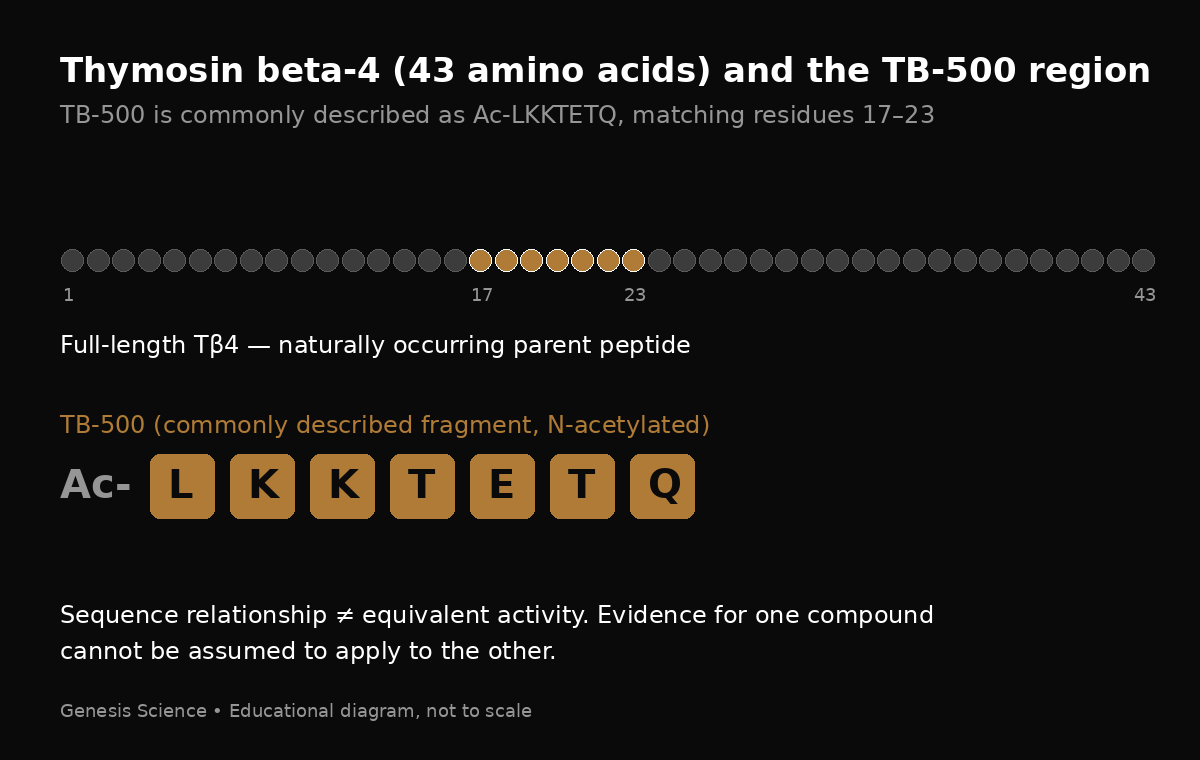
- Thymosin Beta-4 has 43 amino acids; TB-500 is commonly described as Ac-LKKTETQ, matching residues 17–23.
- The shared actin-binding region explains the connection but does not prove equivalent activity.
- A 2026 scoping review included 80 studies from 1,772 records; direct TB-500 evidence was very limited.
- Neither compound is Health Canada-authorized; both are listed in Schedule 4 of the October 2026 Poisons Standard.
- Thymosin Beta-4 is prohibited at all times under WADA rules.
Introduction: What Is the Connection Between TB-500 and Thymosin Beta-4?
TB-500 and Thymosin Beta-4 (Tβ4) are closely connected in peptide research, particularly in investigations involving cellular movement, tissue biology and repair-related processes. However, despite their frequent use in the same discussions, they are not scientifically identical.
Thymosin Beta-4 is a naturally occurring peptide consisting of 43 amino acids. It has been investigated for its involvement in actin regulation, cell migration, blood vessel formation and tissue-related biological processes.
TB-500 is commonly described in the research and peptide literature as a synthetic, N-acetylated seven-amino-acid fragment associated with the actin-binding region of Thymosin Beta-4. Its commonly cited sequence is Ac-LKKTETQ.
This structural relationship explains why the two compounds are frequently discussed together. However, research involving full-length Thymosin Beta-4 cannot automatically be applied to TB-500.
Understanding this distinction is essential when evaluating scientific claims, interpreting published studies and examining the regulatory status of peptide products in Canada.
For background, read What Are Peptides?, compare BPC-157 vs. TB-500, and learn how to read a Certificate of Analysis.
1. What Is Thymosin Beta-4?
Thymosin Beta-4 is a naturally occurring peptide found in many human and animal tissues. It belongs to the beta-thymosin family and consists of 43 amino acids.
Unlike a conventional structural protein, Thymosin Beta-4 is a relatively small peptide with several biological functions. One of its most studied roles involves the regulation of actin, a protein that contributes to the structure, movement and organisation of cells.
Researchers have investigated Thymosin Beta-4 in connection with:
- Cellular migration and organisation.
- Actin regulation and cytoskeletal dynamics.
- Angiogenesis, the formation of new blood vessels.
- Inflammatory signalling.
- Wound and skin biology.
- Tissue remodelling.
- Ocular and corneal research.
- Cardiovascular and other regenerative research areas.
These functions make Thymosin Beta-4 an interesting subject in regenerative biology.
However, biological activity does not automatically translate into a clinically established treatment. The effects observed in laboratory models must be evaluated separately from outcomes in human clinical trials.
The 43-amino-acid structure
A peptide's amino-acid sequence influences its molecular structure and biological activity.
Thymosin Beta-4 contains 43 amino acids arranged in a specific sequence. Its actin-binding region is particularly relevant to research into cellular movement and cytoskeletal regulation.
This region is also central to understanding the relationship between full-length Thymosin Beta-4 and TB-500.
2. What Is TB-500?
TB-500 is a name commonly used for a synthetic peptide fragment associated with Thymosin Beta-4.
In much of the technical literature, TB-500 is described as an N-terminally acetylated heptapeptide with the sequence:
Ac-LKKTETQ
A heptapeptide is a peptide containing seven amino acids.
The sequence is associated with residues 17–23 of full-length Thymosin Beta-4 and includes part of its actin-binding region.
This is why TB-500 is often discussed in relation to the biological functions investigated in Thymosin Beta-4 research.
Why is TB-500 discussed in tissue research?
The scientific interest comes partly from the role of the corresponding region in actin-related cellular processes.
Actin is essential for:
- Maintaining cell shape.
- Supporting cell movement.
- Organising the cytoskeleton.
- Enabling changes in cellular structure.
- Supporting processes involved in cell migration.
Researchers have therefore investigated whether the peptide fragment has biological activity relevant to these processes.
However, it is important to distinguish a proposed mechanism from a demonstrated therapeutic outcome. The biological activity of a fragment cannot simply be assumed to reproduce all the functions of the complete 43-amino-acid peptide.
3. TB-500 vs Thymosin Beta-4: What Are the Main Differences?
Although the compounds are closely related, their molecular size, structure and research histories are different.
| Feature | Thymosin Beta-4 (Tβ4) | TB-500 |
|---|---|---|
| Scientific identity | Naturally occurring peptide | Synthetic peptide fragment commonly associated with Tβ4 |
| Amino-acid length | 43 amino acids | Commonly described as a seven-amino-acid fragment |
| Common sequence description | Full-length Tβ4 sequence | Ac-LKKTETQ |
| Molecular relationship | Parent peptide | Fragment associated with the actin-binding region |
| Main research interest | Actin regulation, cell migration, angiogenesis and tissue biology | Potential activity associated with the corresponding peptide region |
| Research history | Broader experimental and human research literature | Much more limited direct research |
| Human evidence | Investigated in selected clinical research areas | Limited direct human evidence |
| Musculoskeletal evidence | Predominantly preclinical | Very limited direct evidence |
| Canadian regulatory position | Not Health Canada-authorized for human therapeutic use | Not Health Canada-authorized for human therapeutic use; listed in Schedule 4 of the Poisons Standard |
The central distinction: Thymosin Beta-4 is the larger naturally occurring peptide, while TB-500 is commonly described as a synthetic fragment. Their relationship does not establish equivalent biological activity.
4. Understanding the Actin Connection
One of the most important scientific connections between Thymosin Beta-4 and TB-500 involves actin.
Actin is a major component of the cellular cytoskeleton. It helps cells maintain their shape, move through their environment and reorganise themselves in response to biological signals.
Thymosin Beta-4 can bind to monomeric actin, also known as G-actin.
This interaction is important because cells must carefully regulate actin assembly and disassembly to support normal cellular movement.
What is G-actin?
G-actin refers to individual actin protein molecules that can assemble into filamentous actin, commonly known as F-actin.
The balance between these forms is important for cellular structure and movement.
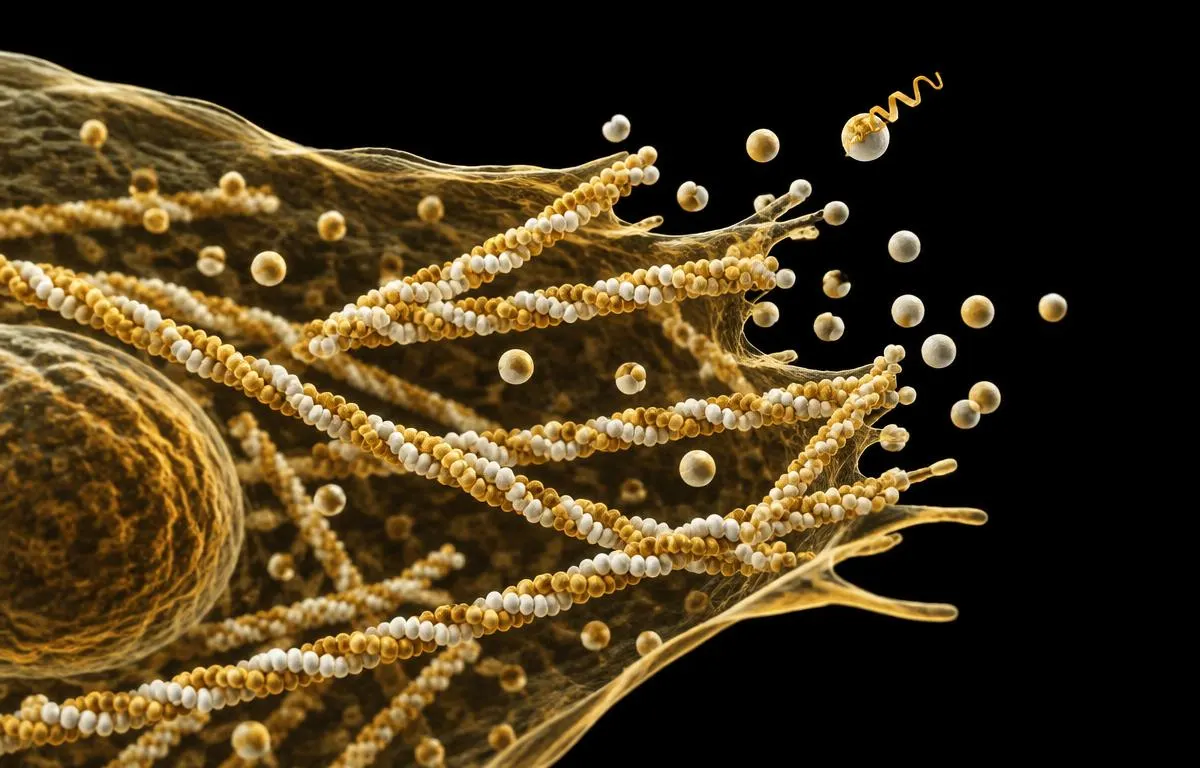
Thymosin Beta-4 has been studied for its ability to bind and regulate G-actin availability.
Why does this matter in tissue research?
Cell migration is involved in many biological processes, including tissue development, immune responses and wound-related activity.
The cytoskeleton helps cells change shape and move in response to their surroundings.
Because Thymosin Beta-4 interacts with actin-related pathways, researchers have investigated its potential role in processes involving:
- Cellular organisation.
- Cell migration.
- Tissue remodelling.
- Vascular development.
- Responses to tissue injury.
The seven-amino-acid region associated with TB-500 is of interest because it includes part of the actin-binding region.
Nevertheless, the complete biological functions of full-length Thymosin Beta-4 cannot be assumed to exist in the shorter fragment.
5. Why Are Thymosin Beta-4 and TB-500 Studied in Tissue Repair Research?
Tissue repair is a complex biological process involving several interacting systems.
Depending on the tissue and type of injury, the process may involve inflammation, cellular migration, blood vessel development, extracellular matrix changes and tissue remodelling.
Researchers have investigated Thymosin Beta-4 because of its relationship with several of these processes.
5.1 Cellular migration
Cells often need to move from one location to another during biological repair processes.
Actin regulation is important for this movement because the cytoskeleton helps cells reorganise their structure.
Thymosin Beta-4 research has examined its involvement in cellular migration and related signalling.
5.2 Angiogenesis and vascular biology
Angiogenesis refers to the formation of new blood vessels from existing vascular structures.
This process is important in several areas of biological research, including wound healing and tissue development.
Thymosin Beta-4 has been investigated in experimental models involving endothelial cells and vascular responses.
However, findings from laboratory models do not establish that TB-500 produces equivalent effects in humans.
5.3 Inflammatory signalling
Inflammation is a normal biological response involving immune cells, signalling molecules and tissue interactions.
Research has explored the relationship between Thymosin Beta-4 and inflammatory pathways.
The scientific objective is to understand how these pathways interact with cellular behaviour and tissue biology.
It is not appropriate to interpret these findings as proof of a clinical anti-inflammatory treatment effect.
5.4 Extracellular matrix and tissue organisation
The extracellular matrix is a network of proteins and other molecules that surrounds cells and helps provide structural support.
Its organisation and remodelling are important in skin, connective tissue and other biological systems.
Researchers have investigated Thymosin Beta-4 in relation to extracellular matrix activity and tissue organisation.
The clinical significance of these findings remains an area for further investigation.
6. What Does the Scientific Research Say?
The published literature on Thymosin Beta-4 is broader than the direct research literature on TB-500.
This distinction is particularly important for readers evaluating online claims about peptide research.
The 2026 scoping review
A 2026 scoping review published in Applied Sciences examined Thymosin Beta-4 and TB-500 in tissue healing, regeneration and musculoskeletal repair.
The researchers searched relevant scientific databases and ClinicalTrials.gov through March 2026.
Their review identified:
| Review finding | Reported result |
|---|---|
| Records initially identified | 1,772 |
| Studies included | 80 |
| Main evidence types | In-vitro, animal, human and registered clinical research |
| Most frequently studied compound | Thymosin Beta-4 |
| Direct TB-500 evidence | Very limited |
| Human musculoskeletal evidence | Limited |
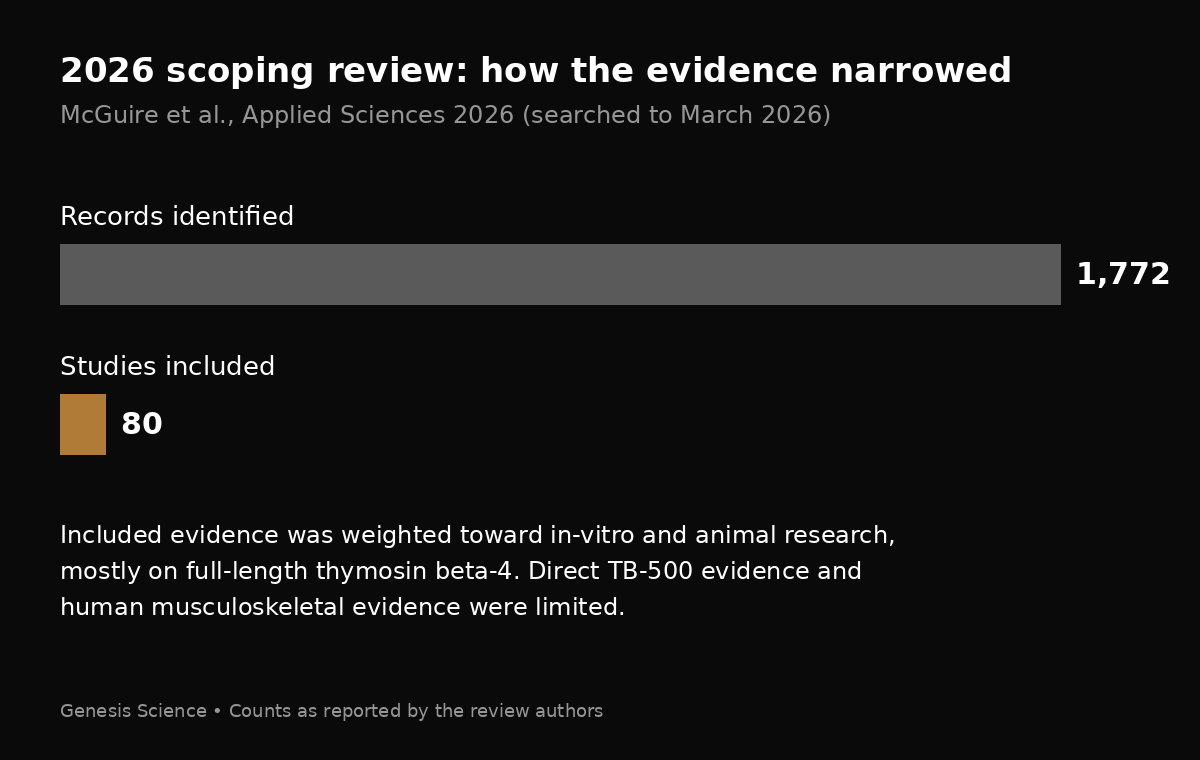
The review found that the available literature was weighted towards laboratory and preclinical research.
Research was concentrated in areas such as:
- Wound, skin and soft-tissue biology.
- Vascular and endothelial research.
- Ocular and corneal research.
- Bone-related research.
Direct research involving tendons, ligaments, muscles, cartilage and spinal tissues was comparatively limited.
The authors also highlighted that direct TB-500 evidence was particularly sparse compared with the broader Thymosin Beta-4 literature.
This is an important distinction: the number of studies involving full-length Thymosin Beta-4 should not be presented as the number of studies directly validating TB-500.
What does this mean?
The review demonstrates scientific interest in both compounds, but it does not establish that either compound is a proven treatment for musculoskeletal injuries.
It also shows why the identity of the actual substance used in a study matters when interpreting research findings.
7. Thymosin Beta-4 Human Research vs TB-500 Human Research
Human research involving full-length Thymosin Beta-4 has explored selected areas beyond laboratory and animal models.
These include investigations involving ocular conditions and wound-related research.
However, these studies do not establish that TB-500 has the same clinical effects.
What has been investigated with full-length Thymosin Beta-4?
Research has explored:
- Ocular and corneal conditions.
- Wound and skin-related outcomes.
- Cardiovascular research.
- Selected inflammatory and tissue-related pathways.
Some clinical investigations have examined topical formulations of full-length Thymosin Beta-4 in wound-related settings.
These findings are specific to the studied formulations, populations and research conditions.
What about TB-500?
The direct human evidence for TB-500 is much more limited.
The 2026 literature review found that only a very small portion of the included evidence directly evaluated TB-500.
There is currently insufficient high-quality human evidence to establish its effectiveness for tendon injuries, ligament damage, muscle recovery or other musculoskeletal conditions.
Why can't the two research histories be combined?
The distinction comes down to molecular identity.
A study using full-length Thymosin Beta-4 evaluates a 43-amino-acid peptide. A study using TB-500 evaluates a shorter synthetic fragment.
Differences in molecular structure can influence:
- Biological activity.
- Stability.
- Distribution in biological systems.
- Metabolism.
- Interaction with cellular targets.
- Safety characteristics.
Therefore, findings from one compound should not automatically be attributed to the other.
8. TB-500 and Thymosin Beta-4: Comparing the Evidence
The following table summarises the current research landscape.
| Research area | Thymosin Beta-4 | TB-500 |
|---|---|---|
| Actin-related research | Established experimental interest | Mechanistic rationale linked to its sequence |
| Cellular migration | Investigated in laboratory models | Limited direct investigation |
| Angiogenesis | Studied in experimental models | Direct evidence is limited |
| Wound and skin research | Broader preclinical and human research | Limited direct evidence |
| Ocular research | Investigated in human and experimental studies | Not established as equivalent |
| Tendon and ligament research | Predominantly preclinical | Very limited direct evidence |
| Muscle research | Limited experimental evidence | Insufficient human evidence |
| Human musculoskeletal trials | No established therapeutic indication | No robust controlled evidence establishing benefit |
| Long-term safety | Not sufficiently established for unapproved therapeutic use | Not sufficiently established |
Research interpretation: Thymosin Beta-4 has a broader scientific literature, while direct TB-500 evidence remains limited. Neither research history should be interpreted as proof of an established musculoskeletal treatment.
9. Safety Considerations: What Remains Unknown?
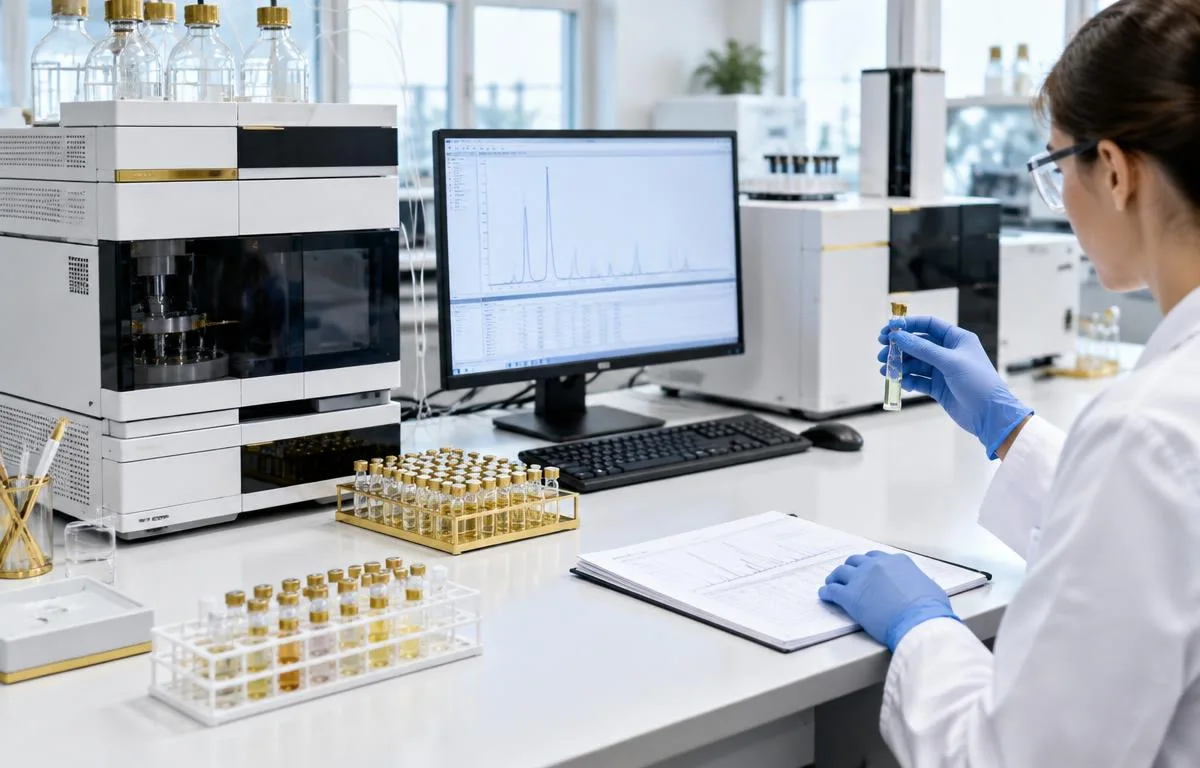
Safety is a major consideration when evaluating experimental peptide products.
Even when a peptide has been investigated in laboratory studies or selected clinical trials, this does not automatically establish the safety of other formulations or delivery methods.
Several factors require careful evaluation.
Product identity and purity
The actual chemical identity of a peptide must be established through appropriate analytical methods.
Products obtained from unverified suppliers may have uncertain composition, purity or concentration.
Sterility and contamination
Unapproved injectable products can introduce additional risks, including contamination, infection and local tissue damage.
The TGA has specifically warned about these risks in relation to unapproved peptide products.
Immunogenicity
Peptides can potentially trigger immune responses.
Aggregation, impurities and manufacturing inconsistencies may influence immunogenicity and other safety concerns.
Long-term effects
The available evidence does not establish the long-term safety of unapproved TB-500 products or establish a comprehensive safety profile for therapeutic use of Thymosin Beta-4.
Cell growth and biological complexity
Thymosin Beta-4 is involved in biological pathways associated with cellular growth, survival and migration.
These processes are complex, and their effects may vary depending on the tissue and biological environment.
The the Canadian Centre for Ethics in Sport guidance also highlights concerns about cell-growth pathways and the possibility of unintended effects, including potential relevance to cancer biology.
These uncertainties reinforce the importance of further research rather than assuming that a naturally occurring peptide or a related synthetic fragment is automatically safe.
10. Canadian Regulatory Status: Is TB-500 Approved by the TGA?
For Canadian readers, regulatory status is an essential part of understanding TB-500 and Thymosin Beta-4.
Health Canada regulates drugs and health products under the Food and Drugs Act.
Is Thymosin Beta-4 approved in Canada?
No. the Canadian Centre for Ethics in Sport states that Thymosin Beta-4 is not authorized by Health Canada for human use.
It should not be presented as an authorized drug in Canada.
Is TB-500 approved in Canada?
TB-500 is not an authorized drug in Canada and has no Drug Identification Number (DIN).
Internationally, Australia's TGA lists TB-500 among examples of unapproved peptide products that may be promoted or supplied online.
In Australia, the October 2026 Poisons Standard also lists TB-500 and Thymosin Beta-4 under Schedule 4 (Prescription Only Medicines).
Schedule 4 classification means prescription-only controls apply in Australia. It does not mean that a product has received regulatory approval or demonstrated clinical effectiveness.
What have regulators said about unapproved peptide products?
In an April 2026 safety advisory, Australia's TGA highlighted several concerns involving unapproved peptide products.
These include:
- Products that have not been assessed for safety, quality or effectiveness.
- Uncertain manufacturing standards.
- Potentially inaccurate product labels.
- Unknown ingredient quantities and concentrations.
- Sterility and contamination concerns.
- Potential adverse reactions and interactions.
- Risks associated with unlawful importation, supply and advertising.
The TGA also makes clear that a label stating “research use only” does not automatically make the supply or importation of a therapeutic product lawful.
Canadian businesses and consumers should consult current Health Canada guidance and applicable provincial requirements before making decisions involving peptide products.
11. Thymosin Beta-4, TB-500 and Anti-Doping Regulations
Another important consideration involves competitive sport.
Thymosin Beta-4 is listed under Section S2.3 of the World Anti-Doping Agency (WADA) Prohibited List, covering growth factors and growth-factor modulators.
the Canadian Centre for Ethics in Sport identifies Thymosin Beta-4 and TB-500 in its anti-doping education material and states that the substance is prohibited at all times.
This means the restriction applies both in and out of competition.
Athletes subject to anti-doping rules should not assume that a product is permitted simply because it is marketed as a research peptide or is not a conventional prescription medicine.
For current requirements, athletes should consult the Canadian Centre for Ethics in Sport and the applicable WADA Prohibited List.
12. What Research Is Still Needed?
Despite the scientific interest surrounding Thymosin Beta-4 and TB-500, important research questions remain.
Future studies should prioritise:
- Molecular characterisation: Establishing the exact structure and identity of the tested peptide.
- Direct comparison: Investigating whether the shorter TB-500 fragment has biological activity equivalent to any specific functions of full-length Thymosin Beta-4.
- Pharmacokinetic research: Understanding how the compounds are absorbed, distributed, metabolised and eliminated.
- Preclinical safety studies: Evaluating toxicity, immunogenicity and potential unintended biological effects.
- Controlled human trials: Assessing safety and meaningful clinical outcomes in clearly defined populations.
- Musculoskeletal research: Investigating specific tendon, ligament, muscle and cartilage questions rather than extrapolating from unrelated tissue models.
- Product quality standards: Ensuring reliable identity, purity, stability and manufacturing consistency.
These areas are necessary to move from biological plausibility towards reliable clinical evidence.
14. Final Thoughts: Understanding the Scientific Connection
TB-500 and Thymosin Beta-4 are connected through their molecular structure and the research interest surrounding actin regulation and cellular behaviour.
Full-length Thymosin Beta-4 is a naturally occurring 43-amino-acid peptide with a broader body of laboratory, preclinical and selected human research.
TB-500 is commonly described as a synthetic, acetylated seven-amino-acid fragment associated with the actin-binding region of the larger peptide. Although this relationship provides a scientific reason to investigate the fragment, it does not establish that TB-500 has the same biological effects or clinical potential as full-length Thymosin Beta-4.
Current research remains uneven, particularly for direct TB-500 applications in musculoskeletal repair. Human evidence is limited, and long-term safety questions remain unresolved.
For Canadian readers, understanding the distinction between research interest, clinical evidence and TGA regulatory approval is essential.
The most responsible approach is to evaluate each peptide according to its exact molecular identity, the quality of its research evidence and its applicable Canadian regulatory status.
Scientific Disclaimer: This article is intended for educational and research-information purposes only. It does not provide medical advice or recommend the use of TB-500 or Thymosin Beta-4. Neither should be represented as an approved therapeutic treatment in Canada. Scientific findings from laboratory, animal or selected clinical studies should not be interpreted as proof of safety or effectiveness for unapproved products. Always consult qualified healthcare professionals for medical concerns and refer to the TGA and the Canadian Centre for Ethics in Sport for current regulatory and anti-doping information.
Frequently asked questions
What is the difference between TB-500 and Thymosin Beta-4?
Thymosin Beta-4 is a naturally occurring peptide containing 43 amino acids. TB-500 is commonly described as a synthetic, acetylated seven-amino-acid fragment associated with the actin-binding region of Thymosin Beta-4. They are related but are not identical.
Is TB-500 the same as Thymosin Beta-4?
No. TB-500 is commonly used to describe a shorter synthetic peptide fragment, while Thymosin Beta-4 refers to the full-length 43-amino-acid peptide. Some regulatory and anti-doping sources use the names together, but the molecular distinction remains important when interpreting scientific studies.
What is the amino-acid sequence of TB-500?
The commonly cited technical description of TB-500 is the N-acetylated heptapeptide Ac-LKKTETQ. Product naming and composition can vary, so the actual identity of a particular material should be verified independently.
How many amino acids does Thymosin Beta-4 contain?
Full-length Thymosin Beta-4 contains 43 amino acids. It is a naturally occurring peptide investigated for its involvement in actin regulation and several cellular processes.
Why is Thymosin Beta-4 associated with actin?
Thymosin Beta-4 binds to monomeric actin, known as G-actin. This interaction is involved in regulating actin availability and cellular cytoskeletal dynamics, which are important for cell shape and movement.
What is the relationship between TB-500 and the actin-binding region?
TB-500 is commonly described as a synthetic fragment associated with part of the actin-binding region of Thymosin Beta-4. This molecular relationship provides a research rationale, but it does not prove that the fragment reproduces all the functions of the full-length peptide.
Has Thymosin Beta-4 been studied in humans?
Yes. Full-length Thymosin Beta-4 has been investigated in selected human research settings, including ocular and wound-related studies. However, these investigations do not establish an approved therapeutic use or prove the effectiveness of TB-500.
Is there strong human evidence for TB-500?
No. Direct human evidence for TB-500 remains limited. Current research does not establish its effectiveness for musculoskeletal injuries, muscle recovery or other commonly promoted applications.
Why can't Thymosin Beta-4 research be used as proof of TB-500 effectiveness?
The two compounds have different molecular structures. Full-length Thymosin Beta-4 contains 43 amino acids, whereas TB-500 is commonly described as a seven-amino-acid fragment. Differences in structure can influence biological activity, metabolism and safety.
Is TB-500 authorized by Health Canada?
No. TB-500 is not an authorized drug in Canada. Australia's TGA also lists it as an unapproved peptide product.
Is Thymosin Beta-4 banned in Canadan sport?
the Canadian Centre for Ethics in Sport identifies Thymosin Beta-4, including TB-500 in its educational material, as prohibited at all times under the relevant anti-doping rules. Athletes should check the current WADA Prohibited List and the Canadian Centre for Ethics in Sport guidance.
What is the main takeaway from TB-500 and Thymosin Beta-4 research?
The main takeaway is that TB-500 and Thymosin Beta-4 have a clear molecular relationship but different scientific identities. Thymosin Beta-4 has a broader research history, while direct TB-500 evidence remains limited. More controlled research is needed before strong clinical conclusions can be made.
References
- McGuire F, Hughes E, Maak T, Cushman DM. (2026). Thymosin Beta-4 and TB-500 in Tissue Healing, Regeneration, and Musculoskeletal Repair: A Scoping Review. Applied Sciences, 16(12), 6202., Peer-reviewed research
- Tewari K, Liu TP, Im C, et al. (2026). Peptide Supplements and Their Therapeutic Applications in Sports Medicine. The American Journal of Sports Medicine., Peer-reviewed research
- Crockford D, Turjman N, Allan C, Angel J. (2010). Thymosin β4: Structure, Function, and Biological Properties Supporting Current and Future Clinical Applications. Annals of the New York Academy of Sciences, 1194(1), 179–189., Peer-reviewed research
- Xing Y, Ye Y, Zuo H, Li Y. (2021). Progress on the Function and Application of Thymosin Beta-4. Frontiers in Endocrinology, 12, 767785., Peer-reviewed research
- Therapeutic Goods Administration (TGA). Understanding your responsibilities when importing, compounding and supplying unapproved peptide products., Canadian regulatory and sport guidance
- Therapeutic Goods Administration (TGA). How we regulate therapeutic peptide products., Canadian regulatory and sport guidance
- Australian Government. Therapeutic Goods (Poisons Standard—October 2026) Instrument 2026., Canadian regulatory and sport guidance
- the Canadian Centre for Ethics in Sport. Thymosin Beta-4: Substance Education and Anti-Doping Information., Canadian regulatory and sport guidance
Research Disclaimer. HelixForge Research content is for educational and informational purposes only. It is not medical advice and does not describe the safety or effectiveness of any product for human use. All HelixForge products are for research use only. See our scientific disclaimer and editorial policy.
Related research
Peptide Research & Scientific Comparisons
BPC-157 vs. TB-500: Comparing the Science Behind Tissue Repair Research
BPC-157 vs. TB-500: explore their proposed mechanisms, tissue repair research, scientific evidence, safety concerns and regulatory status in Canada.
Peptide Science
What Are Peptides? A Complete Guide to Understanding Peptides, Their Structure, Functions and Research
Learn what peptides are, how amino acids form peptide bonds, how peptides work, and how researchers assess identity, purity and laboratory documentation.
Research Documentation
How to Read a Certificate of Analysis (CoA)
A section-by-section walkthrough of the document that records a batch's test results.
Contact the HelixForge Team
Let's Talk Science.
Have a question about an article or a topic you'd like us to explore? Say Hi to the HelixForge Team.
Stay Updated on Research
Receive research insights, scientific updates, and educational resources from HelixForge Research.