
BPC-157 vs. TB-500: Comparing the Science Behind Tissue Repair Research

By Shaun · Published November 12, 2026 · 16 min read
Listen to this article
Device narration · estimated timeline
Device narration · voice quality depends on your browser and installed voices.
Quick Answer
BPC-157 is a synthetic 15-amino-acid peptide; TB-500 commonly refers to a seven-amino-acid fragment associated with thymosin beta-4. They are different molecules. Most tissue-repair evidence is preclinical, direct human evidence remains limited, and neither is an authorized drug in Canada.
Key Takeaways
- BPC-157, TB-500 and full-length thymosin beta-4 are distinct molecular identities.
- The 2026 BPC-157 review included three small human studies totalling 30 participants and rated evidence very low-certainty.
- Much of the thymosin literature evaluates the full-length protein, not TB-500.
- Neither compound has established clinical effectiveness for human musculoskeletal repair.
- Canadian regulation, anti-doping requirements and independent product testing matter.
Introduction: Why Are Researchers Comparing BPC-157 and TB-500?
Tissue repair is a complex biological process involving inflammation, cellular communication, blood vessel formation, collagen organisation and the gradual remodelling of damaged tissue.
These processes are attracting considerable attention in regenerative medicine and experimental peptide research. Two compounds frequently discussed in this area are BPC-157 and TB-500.
Both are associated with scientific discussions about tissue repair, but they are biologically distinct compounds with different research histories.
BPC-157 is a synthetic pentadecapeptide investigated primarily in laboratory and animal models involving tendon, ligament, muscle, gastrointestinal and other tissue systems.
For the scientific foundations, read What Are Peptides?. Compare this evidence with GHK-Cu vs. KLOW and learn how to read a Certificate of Analysis.
TB-500 is a name commonly used for a synthetic fragment associated with thymosin beta-4 (Tβ4), a naturally occurring protein involved in cellular processes such as actin regulation and cell migration.
Although online discussions sometimes group these compounds together as experimental recovery peptides, their proposed mechanisms, available research and limitations are not interchangeable.
So, what is the difference between BPC-157 and TB-500? What does the scientific literature actually show? And how much of the current discussion is supported by human evidence?
This article examines the molecular background, proposed biological mechanisms, preclinical findings, human evidence, safety considerations and Canadian regulatory context surrounding BPC-157 vs. TB-500.
1. What Is BPC-157?
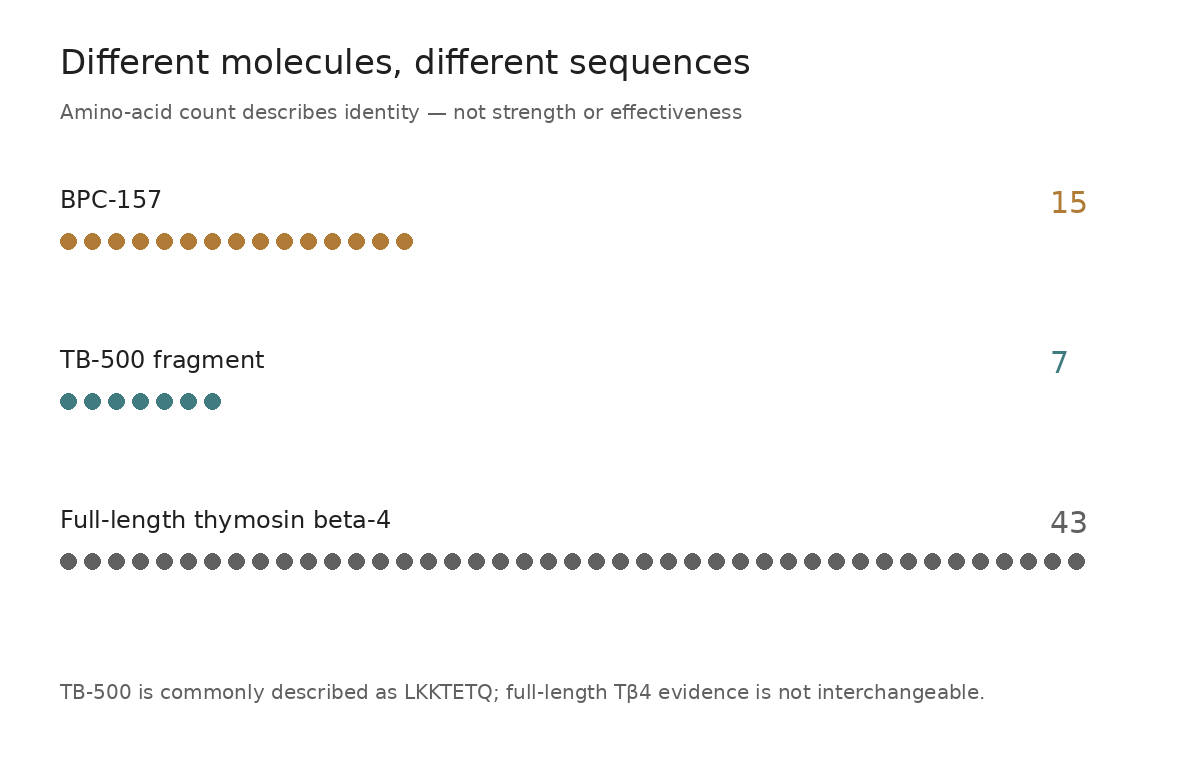
BPC-157, short for Body Protection Compound-157, is a synthetic peptide consisting of 15 amino acids.
It is often described in scientific literature as a stable gastric pentadecapeptide. Researchers have investigated its biological activity in several experimental models, particularly those involving gastrointestinal protection, inflammation and tissue repair.
BPC-157 has attracted attention because laboratory and animal studies have reported changes in biological processes associated with tissue response and repair.
However, it is important to distinguish between experimental findings and demonstrated clinical outcomes. Much of the research involving BPC-157 has been conducted in animals or laboratory settings rather than large, controlled human clinical trials.
What Does BPC-157 Research Investigate?
Research involving BPC-157 has explored several areas:
- Tendon and ligament injury models.
- Muscle tissue and skeletal muscle injury.
- Bone and joint-related research.
- Gastrointestinal tissue protection.
- Inflammatory signalling.
- Blood vessel formation and vascular responses.
- Cellular migration and tissue remodelling.
These areas represent research interests, not established medical indications.
Proposed Biological Mechanisms of BPC-157
Scientists have investigated several possible pathways through which BPC-157 may influence tissue-related processes.
Angiogenesis and vascular signalling
Angiogenesis refers to the formation of new blood vessels from existing vessels. It is an important part of tissue development and certain repair processes.
Some preclinical BPC-157 studies have investigated its relationship with vascular signalling, including pathways associated with vascular endothelial growth factor (VEGF).
Nitric oxide-related pathways
Nitric oxide is a signalling molecule involved in vascular function, blood flow regulation and cellular communication.
Experimental research has examined interactions between BPC-157 and nitric oxide-related pathways. However, the exact mechanisms and their relevance to human tissue repair remain uncertain.
Cellular migration and tissue organisation
Cell migration is involved in several stages of tissue repair. Researchers have investigated whether BPC-157 influences cellular movement and processes associated with tissue organisation.
These proposed mechanisms are scientifically interesting, but they should not be interpreted as proof of a clinically meaningful recovery effect in humans.
2. What Is TB-500?
TB-500 is a name commonly used for a synthetic peptide fragment associated with thymosin beta-4 (Tβ4).
Thymosin beta-4 is a naturally occurring 43-amino-acid protein found in many tissues and cell types. It is involved in biological processes that include actin regulation, cell migration and tissue response.
The distinction between full-length thymosin beta-4 and TB-500 is particularly important.
TB-500 is commonly described in regulatory and scientific discussions as a seven-amino-acid fragment of thymosin beta-4, often identified by the sequence LKKTETQ.
It should not automatically be treated as biologically or clinically equivalent to the full-length protein.
What Does TB-500 Research Investigate?
Research involving thymosin beta-4 and related fragments has explored several biological areas:
- Cell migration and cellular movement.
- Actin regulation and cytoskeletal organisation.
- Wound and skin-related research.
- Blood vessel development.
- Corneal and ocular tissue research.
- Inflammation-related signalling.
- Experimental tissue regeneration.
An important limitation is that much of the published research concerns full-length thymosin beta-4 rather than the specific TB-500 fragment sold or discussed commercially.
Evidence involving one molecule cannot automatically establish the effects of another.
Understanding Actin and Cellular Movement
Actin is a structural protein that helps maintain cell shape and supports movement within cells and across tissue environments.
Thymosin beta-4 interacts with actin-related processes, making it relevant to research into cellular migration and tissue responses.
These processes are important in biological repair, but their involvement does not establish that TB-500 produces effective or safe tissue recovery in humans.
3. BPC-157 vs. TB-500: What Are the Main Scientific Differences?
Although both compounds are discussed in regenerative research, they have different molecular identities and proposed biological activities.
| Scientific feature | BPC-157 | TB-500 |
|---|---|---|
| Common description | Synthetic 15-amino-acid peptide | Synthetic fragment associated with thymosin beta-4 |
| Molecular background | Gastric pentadecapeptide research | Thymosin beta-4-related research |
| Commonly discussed pathways | Vascular signalling, nitric oxide-related pathways and cellular responses | Actin regulation and cellular migration |
| Research emphasis | Tendon, ligament, muscle, gastrointestinal and other tissue models | Cell migration, wound-related research and tissue responses |
| Preclinical evidence | Extensive animal-model literature | Research includes full-length thymosin beta-4 and related fragments |
| Human evidence | Very limited and low-certainty | Limited direct human evidence for the TB-500 fragment |
| Health Canada status | Not approved as a medicine | Not approved as a medicine |
Are BPC-157 and TB-500 the Same Type of Peptide?
No.
They are different molecules with different sequences and biological backgrounds.
BPC-157 is a synthetic 15-amino-acid peptide. TB-500 is commonly identified as a seven-amino-acid fragment associated with thymosin beta-4.
Their research interests overlap in areas such as cellular responses and tissue repair, but this does not mean they have identical mechanisms or effects.
Is TB-500 the Same as Thymosin Beta-4?
No. This is one of the most important distinctions in the current peptide research discussion.
Thymosin beta-4 is a naturally occurring 43-amino-acid protein. TB-500 is commonly described as a shorter synthetic fragment associated with that protein.
Research involving full-length thymosin beta-4 may provide biological context, but it cannot automatically be used as proof of TB-500's safety, effectiveness or clinical potential.
4. What Does the Research Say About BPC-157 and Tissue Repair?
BPC-157 has been investigated in a range of experimental models involving musculoskeletal and other tissue systems.
Much of this research has focused on animals, including rodents, with studies examining tendon, ligament, muscle, bone and gastrointestinal responses.
Tendon and Ligament Research
Tendons connect muscles to bones, while ligaments connect bones to other bones. Both contain organised connective tissue and depend on complex biological processes to maintain their structure.
Preclinical studies have investigated BPC-157 in experimental tendon and ligament injury models.
Researchers have examined outcomes involving:
- Tissue organisation.
- Collagen-related changes.
- Cellular responses.
- Mechanical properties of repaired tissue.
- Local vascular and inflammatory processes.
These findings have generated interest in BPC-157 as a subject of regenerative research.
However, animal injury models do not establish that the same outcomes occur in human tendons or ligaments. Differences in anatomy, injury conditions, metabolism and experimental design make direct translation difficult.
Muscle Tissue Research
Some animal studies have investigated BPC-157 in models involving skeletal muscle injury.
These studies have examined biological responses associated with muscle tissue structure, inflammation and repair.
However, evidence from experimental muscle injury models cannot establish that BPC-157 improves athletic performance, accelerates recovery after exercise or treats human muscle injuries.
Such claims require appropriately designed human clinical trials.
What Does Recent Human Evidence Show?
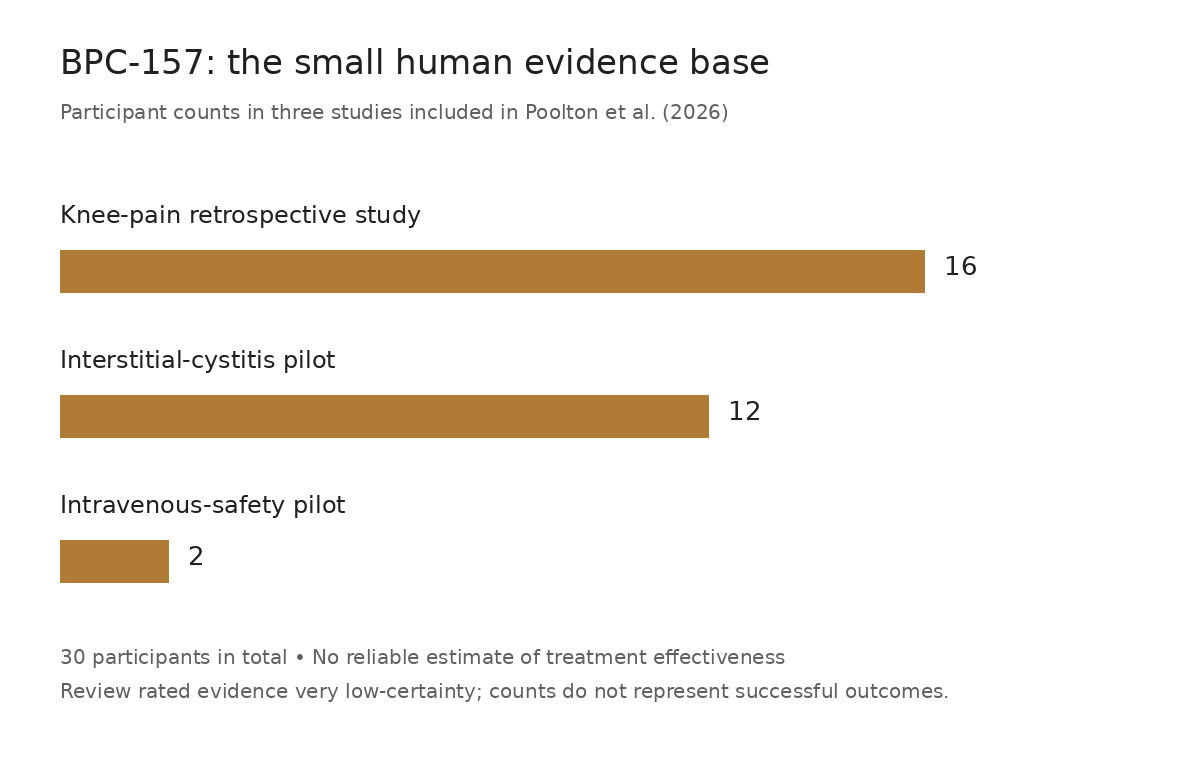
A systematic review published in October 2026 examined the available human evidence for BPC-157 in orthopaedic and regenerative applications.
The review identified only three small human studies, involving a total of 30 participants:
- A retrospective study involving 16 participants with knee pain.
- A retrospective pilot study involving 12 participants with interstitial cystitis.
- A prospective pilot study examining intravenous safety in two participants.
Although the studies reported some positive observations, the authors considered their methodological quality poor.
The overall certainty of evidence was rated very low because of limitations including risk of bias, small participant numbers and imprecise findings.
This is an important development in the research landscape: human studies exist, but they are not sufficient to establish BPC-157 as a proven treatment for orthopaedic injuries.
5. What Does the Research Say About TB-500 and Tissue Repair?
Research associated with TB-500 is closely connected to the broader scientific literature on thymosin beta-4.
Thymosin beta-4 has been investigated in laboratory, animal and human research involving several tissue systems.
However, the evidence must be interpreted carefully because many studies evaluate the full-length protein rather than the TB-500 fragment.
Thymosin Beta-4 and Cellular Migration
One of the major areas of thymosin beta-4 research involves actin-related cellular processes.
Actin helps regulate cell structure and movement. Cellular migration is important in processes such as wound response, tissue development and certain repair mechanisms.
Researchers have investigated how thymosin beta-4 interacts with these processes in different experimental environments.
These findings help explain why thymosin beta-4 has attracted interest in regenerative medicine.
However, they do not establish that TB-500 produces equivalent effects in human tissue.
Wound and Skin Research
Thymosin beta-4 has been studied in experimental wound-healing models.
Research has examined areas such as:
- Cell migration.
- Tissue response.
- Blood vessel development.
- Inflammatory signalling.
- Skin and wound-related processes.
Some human research involving full-length thymosin beta-4 has explored specific applications, including ocular and wound-related settings.
These studies should not be confused with clinical trials demonstrating the effectiveness of commercially marketed TB-500 for tendon, ligament or muscle injuries.
Musculoskeletal Research: What Is Still Missing?
A 2026 scoping review examined the published research involving thymosin beta-4 and TB-500 in tissue healing, regeneration and musculoskeletal repair.
The review included 80 studies, but the evidence base was weighted towards laboratory and mixed experimental designs.
The authors found that most studies evaluated thymosin beta-4 rather than TB-500 itself.
Human research was concentrated in areas such as ocular and wound-related applications, while direct evidence involving TB-500 and musculoskeletal repair remained limited.
This distinction matters because research on full-length thymosin beta-4 cannot automatically be transferred to TB-500.
6. BPC-157 vs. TB-500: Comparing the Available Scientific Evidence
The available literature shows that both compounds have attracted research interest, but neither has a sufficiently established human evidence base to support broad claims about tissue repair.
| Research area | BPC-157 | TB-500 |
|---|---|---|
| Laboratory research | Available | Available, with much related research involving thymosin beta-4 |
| Animal tissue models | Extensive relative to human evidence | Available, but much evidence concerns full-length thymosin beta-4 |
| Tendon and ligament models | Investigated in preclinical studies | Direct TB-500 evidence remains limited |
| Muscle-related models | Investigated in preclinical studies | Direct evidence remains limited |
| Wound and skin research | Experimental research available | Thymosin beta-4 has a broader research history |
| Human musculoskeletal evidence | Very limited, low-certainty evidence | Insufficient direct evidence |
| Established clinical treatment | No | No |
Which Compound Has More Research Behind It?
The answer depends on which type of research is being considered.
BPC-157 has a substantial preclinical literature involving animal models of tendon, ligament, muscle and other tissue responses.
Thymosin beta-4 has a broader experimental and human research history across several biological areas, including ocular and wound-related research.
However, TB-500 is a specific fragment, and the available literature directly examining that fragment is much more limited.
Therefore, it would be misleading to compare all thymosin beta-4 studies with BPC-157 studies and present the results as a direct comparison between BPC-157 and TB-500.
Does One Have Stronger Human Evidence?
Neither currently has strong human clinical evidence establishing effectiveness for musculoskeletal tissue repair.
The limited human evidence involving BPC-157 is low-certainty and methodologically weak.
For TB-500, direct human evidence relevant to tendon, ligament and muscle repair is especially limited.
A reliable comparison would require well-designed, controlled human studies that evaluate the exact compounds, clearly defined outcomes and long-term safety.
7. What Are the Safety Considerations?
Safety is a major consideration when evaluating experimental peptides.
A compound showing biological activity in laboratory or animal research is not automatically safe for human use.
Important questions include:
- How does the compound behave in the human body?
- What are its pharmacokinetic properties?
- What adverse effects may occur?
- Are there potential interactions with medicines?
- How consistent is the compound's manufacturing quality?
- What are the possible long-term effects?
For BPC-157 and TB-500, many of these questions remain unanswered.
BPC-157 Safety Considerations
There is insufficient high-quality human evidence to establish the short-term and long-term safety profile of BPC-157.
Potential concerns include:
- Limited human safety data.
- Uncertainty around pharmacological behaviour.
- Inadequate information about long-term exposure.
- Potential immune reactions and peptide-related impurities.
- Uncertainty about product identity, purity and manufacturing quality.
The US Food and Drug Administration has also identified potential safety concerns involving compounded BPC-157, including immunogenicity risks for certain routes of administration and difficulties associated with peptide impurities and active ingredient characterisation.
TB-500 Safety Considerations
The safety profile of TB-500 is also insufficiently established.
The FDA has identified potential immunogenicity concerns involving the thymosin beta-4 fragment commonly known as TB-500.
These concerns include possible aggregation and peptide-related impurities. The agency has also noted a lack of human exposure data for drug products containing this fragment.
This means that findings from studies involving full-length thymosin beta-4 cannot be treated as a complete safety assessment for TB-500.
Why Product Quality Matters
An additional concern involves products marketed online as research peptides.
Without appropriate regulatory oversight and reliable manufacturing controls, the actual contents of a product may differ from its label.
Potential quality issues include:
- Incorrect ingredient identity.
- Inaccurate concentration.
- Undeclared substances.
- Contamination.
- Inadequate sterility.
- Inconsistent manufacturing standards.
These concerns are particularly important for products presented in injectable forms.
Scientific research into a compound does not verify the quality or safety of a commercially available product carrying its name.
8. What Is the Regulatory Status of BPC-157 and TB-500 in Canada?
For Canadian readers, understanding the regulatory status of these compounds is essential.
Health Canada regulates drugs and health products under the Food and Drugs Act and its regulations.
A product intended for therapeutic use generally needs Health Canada market authorization and a Drug Identification Number (DIN), unless an applicable exemption, approval or other lawful access pathway applies.
Is BPC-157 Authorized in Canada?
No. BPC-157 is not an authorized drug in Canada and has no Drug Identification Number (DIN).
Internationally, Australia's TGA identifies BPC-157 among unapproved peptide products that have not been evaluated for safety, quality or effectiveness through the usual registration process.
Is TB-500 Authorized in Canada?
No. TB-500 is also an unapproved peptide product in Canada and has no Drug Identification Number (DIN).
The TGA has specifically included TB-500 among peptide products associated with regulatory and public health concerns.
What Have International Regulators Warned About?
In April 2026, the TGA published guidance concerning the importation, compounding and supply of unapproved peptide products.
The guidance highlighted concerns about product quality, inaccurate labelling, sterility, contamination and the lack of adequate safety and effectiveness assessments.
On 19 June 2026, the TGA and Australia's Chief Medical Officer issued a joint statement raising further concerns about serious adverse effects associated with unapproved peptide products.
These included reports of liver damage, severe allergic reactions requiring hospitalisation and other inflammatory complications.
The TGA also warned that unapproved products may not contain the ingredients or concentrations stated on their labels.
For example, on 5 November 2026, the TGA reported laboratory testing in which some products labelled as containing TB-500 had no detectable TB-500.
These findings demonstrate why product identity and quality cannot be assumed from a label or online description.
Canadian regulatory references:
- TGA – How we regulate therapeutic peptide products
- TGA – Responsibilities when importing, compounding and supplying unapproved peptide products
- TGA – Public health risks associated with unapproved peptide products
- TGA – Testing finds unapproved peptides do not contain what their labels claim
Important Canadian context: Products being described as "research use only" does not automatically make their importation, supply, advertising or use lawful. The applicable requirements depend on the product, its intended purpose and the relevant regulatory pathway.
9. What Does Anti-Doping Regulation Say About BPC-157 and TB-500?
The regulatory position is also important for Canadian athletes and people involved in competitive sport.
BPC-157 is included in the World Anti-Doping Agency (WADA) Prohibited List under category S0, Non-Approved Substances.
Thymosin beta-4 and its derivatives, including TB-500, are also prohibited under the applicable WADA rules.
This means athletes subject to anti-doping requirements should be aware that these compounds can create significant eligibility and compliance issues.
the Canadian Centre for Ethics in Sport provides educational information about BPC-157 and other substances prohibited in sport.
Official resource: the Canadian Centre for Ethics in Sport – BPC-157 Information
Athletes should always consult the current WADA Prohibited List and the relevant sporting authority rather than relying on product descriptions or claims made by suppliers.
10. What Can Future Research Tell Us?
The scientific interest in BPC-157 and thymosin beta-4-related compounds reflects a broader effort to understand the biological mechanisms involved in tissue repair.
However, several important research questions remain.
More Human Clinical Trials
Future research needs appropriately designed human studies with sufficient participant numbers and clearly defined clinical outcomes.
For BPC-157, this means moving beyond small uncontrolled studies and establishing whether preclinical observations translate into meaningful human outcomes.
For TB-500, researchers need to distinguish the specific fragment from full-length thymosin beta-4 and evaluate the fragment itself.
Better Understanding of Biological Mechanisms
Further studies are needed to establish how these compounds interact with cellular pathways in human tissue.
Researchers must determine which mechanisms are reproducible, which are specific to particular experimental models and whether they produce measurable clinical effects.
Long-Term Safety Research
Long-term safety remains a major evidence gap.
Future studies should examine adverse effects, immune responses, pharmacokinetics, interactions and the consequences of exposure over time.
Manufacturing and Product Characterisation
Reliable research also depends on knowing exactly what substance is being investigated.
Accurate molecular identification, purity assessment, impurity profiling and manufacturing consistency are essential for interpreting experimental results.
Without reliable product characterisation, it becomes difficult to determine whether different studies are evaluating the same compound.
11. BPC-157 vs. TB-500: What Do We Know So Far?
BPC-157 and TB-500 are two distinct compounds that have attracted interest in experimental tissue repair research.
BPC-157 has been studied extensively in preclinical models involving tendon, ligament, muscle and other tissue systems. However, its human evidence remains very limited and low-certainty.
TB-500 is commonly described as a fragment associated with thymosin beta-4. Although full-length thymosin beta-4 has a broader research history, direct evidence establishing TB-500's effectiveness for human musculoskeletal repair remains insufficient.
The key scientific differences can be summarised as follows:
- BPC-157: A synthetic 15-amino-acid peptide investigated in multiple preclinical tissue models.
- TB-500: A synthetic fragment associated with thymosin beta-4, with limited direct clinical evidence for musculoskeletal applications.
- Human evidence: Neither compound has established clinical effectiveness for tendon, ligament or muscle repair.
- Safety: Important questions about human safety, long-term effects and product quality remain unresolved.
- Canadian regulation: Neither compound is an authorized drug in Canada (no DIN).
Final Thoughts
The comparison between BPC-157 and TB-500 demonstrates why scientific research needs to be interpreted carefully.
Promising laboratory findings can help researchers identify potential biological pathways, but they do not establish that an experimental compound is an effective or safe treatment for people.
Understanding molecular differences, study limitations, human evidence and regulatory requirements is essential when evaluating emerging peptide research.
At HelixForge Research, our objective is to explore these developments through evidence-based scientific education, using published research and authoritative regulatory information to distinguish established findings from emerging hypotheses.
Good science does not stop at promising results. It asks how reliable the evidence is, what remains unknown and whether the findings can be reproduced.
Editorial disclaimer: This article is intended for scientific and educational purposes only. It does not constitute medical advice, diagnosis or treatment recommendations. BPC-157 and TB-500 are investigational, unapproved peptide products in Canada. The discussion of experimental mechanisms and preclinical findings does not establish human safety, effectiveness or suitability for clinical use. Readers should consult appropriately qualified healthcare professionals regarding medical questions.
Frequently asked questions
What is the main difference between BPC-157 and TB-500?
BPC-157 is a synthetic 15-amino-acid peptide, while TB-500 is commonly described as a synthetic fragment associated with the naturally occurring protein thymosin beta-4. They have different molecular structures and proposed biological mechanisms.
Are BPC-157 and TB-500 the same peptide?
No. BPC-157 and TB-500 are different compounds. BPC-157 is a pentadecapeptide, while TB-500 is commonly identified as a seven-amino-acid fragment associated with thymosin beta-4.
What does BPC-157 research investigate?
Preclinical BPC-157 research has investigated tendon, ligament, muscle, bone, gastrointestinal and other tissue models. Researchers have also explored possible interactions with vascular signalling, nitric oxide-related pathways and cellular responses. These findings do not establish clinical effectiveness in humans.
What does TB-500 research investigate?
TB-500-related research is associated with thymosin beta-4 and biological processes involving actin regulation, cellular migration and tissue responses. Much of the broader research concerns full-length thymosin beta-4 rather than TB-500 itself.
Is BPC-157 proven to repair tendons in humans?
No. Although animal studies have investigated BPC-157 in tendon and ligament injury models, current human evidence is very limited and low-certainty. It has not been established as a proven treatment for human tendon injuries.
Is TB-500 proven to improve muscle recovery?
No. There is insufficient high-quality human clinical evidence to establish that TB-500 improves muscle recovery or treats muscle injuries. Preclinical findings involving thymosin beta-4 should not be treated as proof of TB-500's clinical effectiveness.
Which has more scientific research, BPC-157 or TB-500?
BPC-157 has a substantial preclinical literature involving animal models of musculoskeletal and other tissue responses. Thymosin beta-4 has a broader research history, including some human studies, but much of that research concerns the full-length protein rather than TB-500. Directly comparing the total research literature can therefore be misleading.
Are BPC-157 and TB-500 approved in Canada?
No. Neither BPC-157 nor TB-500 is an authorized drug in Canada with a Drug Identification Number. Australia's Therapeutic Goods Administration has also listed both among unapproved peptide products.
Are BPC-157 and TB-500 prohibited in competitive sport?
BPC-157 is prohibited under WADA category S0, Non-Approved Substances. Thymosin beta-4 and its derivatives, including TB-500, are also prohibited under the applicable anti-doping rules. Athletes should check the current WADA Prohibited List and consult their sporting authority.
Can research on thymosin beta-4 be used as evidence for TB-500?
Not automatically. Thymosin beta-4 is a full-length 43-amino-acid protein, while TB-500 is commonly described as a shorter fragment. Evidence involving the full-length protein cannot establish the safety or effectiveness of the fragment without direct supporting research.
What are the main safety concerns with unapproved peptides?
Concerns include uncertain product identity, inaccurate labelling, contamination, inadequate sterility, potential immune reactions, unknown interactions and limited long-term safety data. Regulators, including Australia's TGA, have warned about serious adverse effects associated with unapproved peptide products.
Where can readers find reliable BPC-157 and TB-500 research?
Useful sources include PubMed, peer-reviewed scientific journals, Health Canada, the Canadian Centre for Ethics in Sport, the World Anti-Doping Agency and recognised clinical trial registries. Readers should distinguish peer-reviewed human studies from animal experiments, laboratory research and commercial claims.
References
- Poolton J, Minett J and Kazmi A. (2026). Human evidence for BPC-157 in orthopaedic and regenerative medicine: a systematic review of efficacy and safety. Acta Orthopaedica Belgica., Peer-reviewed research
- McGuire F, Hughes E, Maak T and Cushman DM. (2026). Thymosin Beta-4 and TB-500 in Tissue Healing, Regeneration, and Musculoskeletal Repair: A Scoping Review. Applied Sciences., Peer-reviewed research
- Tham A, Hodgkins CW and Kennedy JG. (2026). Investigational Peptides in Orthopaedic Practice: Evidence, Safety, and Patient Counseling for BPC-157, Thymosin Beta-4, and TB-500. Journal of the American Academy of Orthopaedic Surgeons., Peer-reviewed research
- US Food and Drug Administration. Certain Bulk Drug Substances for Use in Compounding That May Present Significant Safety Risks., US Food and Drug Administration
- Australian Therapeutic Goods Administration. How We Regulate Therapeutic Peptide Products., Canadian regulatory and sport guidance
- Australian Therapeutic Goods Administration. (2026). Understanding Your Responsibilities When Importing, Compounding and Supplying Unapproved Peptide Products., Canadian regulatory and sport guidance
- Australian Therapeutic Goods Administration. (2026). Concerns Regarding the Public Health Risks Associated With Unapproved Peptide Products., Canadian regulatory and sport guidance
- Australian Therapeutic Goods Administration. (2026). TGA Testing Finds Unapproved Peptides Do Not Contain What Their Labels Claim., Canadian regulatory and sport guidance
- the Canadian Centre for Ethics in Sport. BPC-157 Information., Canadian regulatory and sport guidance
Research Disclaimer. HelixForge Research content is for educational and informational purposes only. It is not medical advice and does not describe the safety or effectiveness of any product for human use. All HelixForge products are for research use only. See our scientific disclaimer and editorial policy.
Related research
Peptide Science
GHK-Cu vs. KLOW: Understanding Copper Peptides and Their Research Potential
Explore GHK-Cu vs KLOW, their ingredients, proposed mechanisms, scientific evidence and Health Canada regulatory status in this research-focused guide.
Peptide Science
What Are Peptides? A Complete Guide to Understanding Peptides, Their Structure, Functions and Research
Learn what peptides are, how amino acids form peptide bonds, how peptides work, and how researchers assess identity, purity and laboratory documentation.
Research Documentation
How to Read a Certificate of Analysis (CoA)
A section-by-section walkthrough of the document that records a batch's test results.
Contact the HelixForge Team
Let's Talk Science.
Have a question about an article or a topic you'd like us to explore? Say Hi to the HelixForge Team.
Stay Updated on Research
Receive research insights, scientific updates, and educational resources from HelixForge Research.