
How Do Peptides Work at a Scientific Level?

By Shaun · Published November 5, 2026 · 6 min read
Listen to this article
Device narration · estimated timeline
Device narration · voice quality depends on your browser and installed voices.
Quick Answer
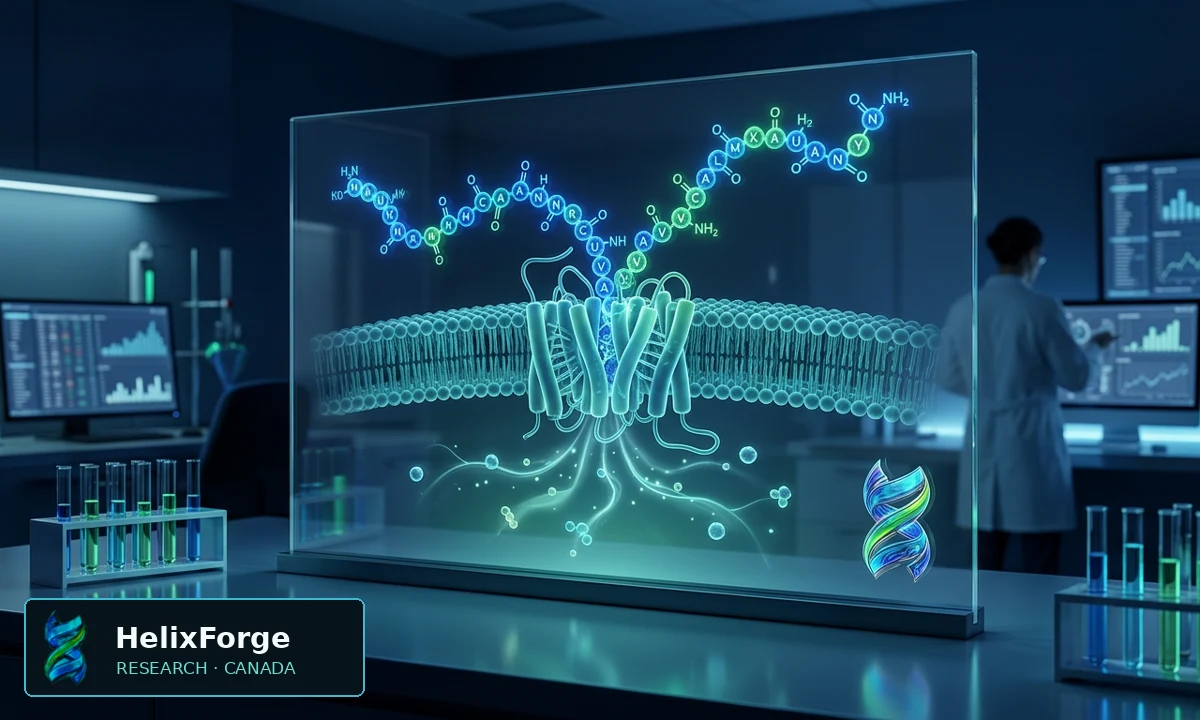
Peptides work by interacting with specific molecular targets — most often receptors on cell surfaces, but also enzymes, transporters and other proteins. A peptide's amino acid sequence determines its three-dimensional shape and chemical surface, which determines what it can bind. Binding triggers a measurable event, such as a signalling cascade inside the cell or the blocking of an enzyme. The effect ends when the peptide dissociates or is broken down by proteases, which is why most peptides act briefly and why stability is a central research question.
Key Takeaways
- A peptide's sequence determines its shape, and its shape determines which molecular targets it can bind.
- Most studied peptides act by binding cell-surface receptors and triggering intracellular signalling cascades.
- Binding is selective but not absolute: affinity, concentration and target availability all shape the observed effect.
- Proteases break peptides down quickly in biological systems, so duration of action is usually short.
- Mechanism demonstrated in a laboratory system does not by itself establish safety or effectiveness in humans.
Introduction: from sequence to effect
When researchers ask how a peptide works, they are really asking a chain of connected questions: What does the molecule look like? What does it bind? What happens after binding? And how long does it last before the body or the assay breaks it down?
This article walks through that chain at a scientific level, using well-established biochemistry. It describes how peptides in general interact with biological systems. It does not describe the safety or effectiveness of any product, and laboratory mechanisms should never be read as evidence of benefit in humans.
For the foundations, start with What Are Peptides? — amino acids, peptide bonds and biological functions, then return here for the molecular mechanisms.
1. Structure determines function
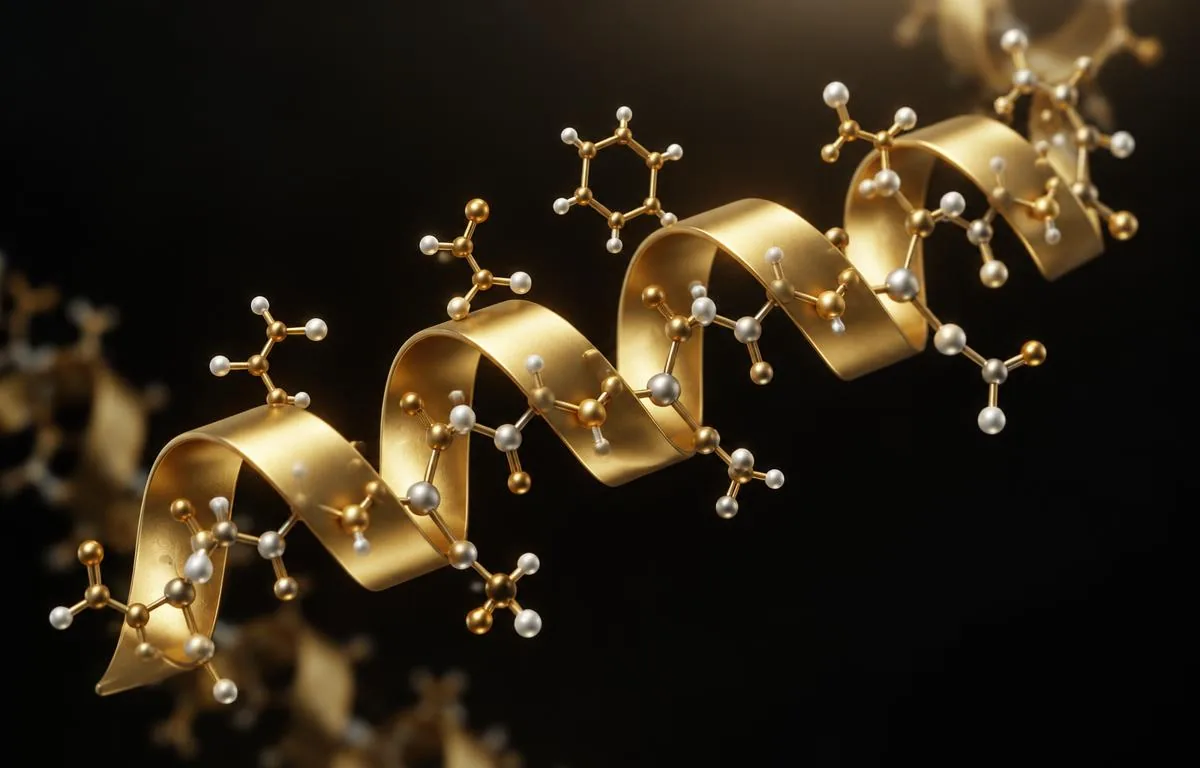
A peptide is a short chain of amino acids joined by peptide bonds. The order of those amino acids — the sequence — is the molecule's primary structure. Because each amino acid carries a different side chain, the sequence fixes the pattern of charges, hydrogen-bond donors and acceptors, and oily (hydrophobic) patches along the chain.
In water, the chain folds or stays flexible according to that pattern. Some peptides adopt stable shapes such as alpha-helices; others remain largely disordered until they meet their target. Either way, the sequence defines a three-dimensional chemical surface, and that surface is what the rest of biology sees.
This is why a single amino acid change can transform a peptide's behaviour: it can alter the fold, move a charge, or remove a contact point that a receptor depended on. Structure is not a detail of peptide science — it is the mechanism's foundation.
2. Molecular recognition: finding the target
Peptides exert effects by binding other molecules, a process called molecular recognition. Binding is governed by non-covalent forces: hydrogen bonds, electrostatic attraction, van der Waals contacts and hydrophobic interactions. Individually these forces are weak; together, across a complementary surface, they can hold a peptide to its target with high affinity and high selectivity.
The most important targets in peptide research are receptors — proteins, usually embedded in cell membranes, that exist to receive chemical signals. Many natural peptides are hormones or neurotransmitters, and their receptors are tuned to recognise them. A synthetic peptide may mimic a natural ligand, block it, or bind a different site on the same protein.
| Target class | What the peptide does | Typical readout |
|---|---|---|
| Cell-surface receptors (e.g. GPCRs) | Activates or blocks the receptor from outside the cell | Second-messenger levels, reporter assays |
| Enzymes | Inhibits or modulates catalytic activity | Reaction rate, substrate conversion |
| Ion channels and transporters | Opens, blocks or modulates movement across membranes | Electrophysiology, flux assays |
| Protein–protein interfaces | Disrupts or stabilises interactions between proteins | Binding assays, cellular phenotype |
3. Receptor binding and signal transduction
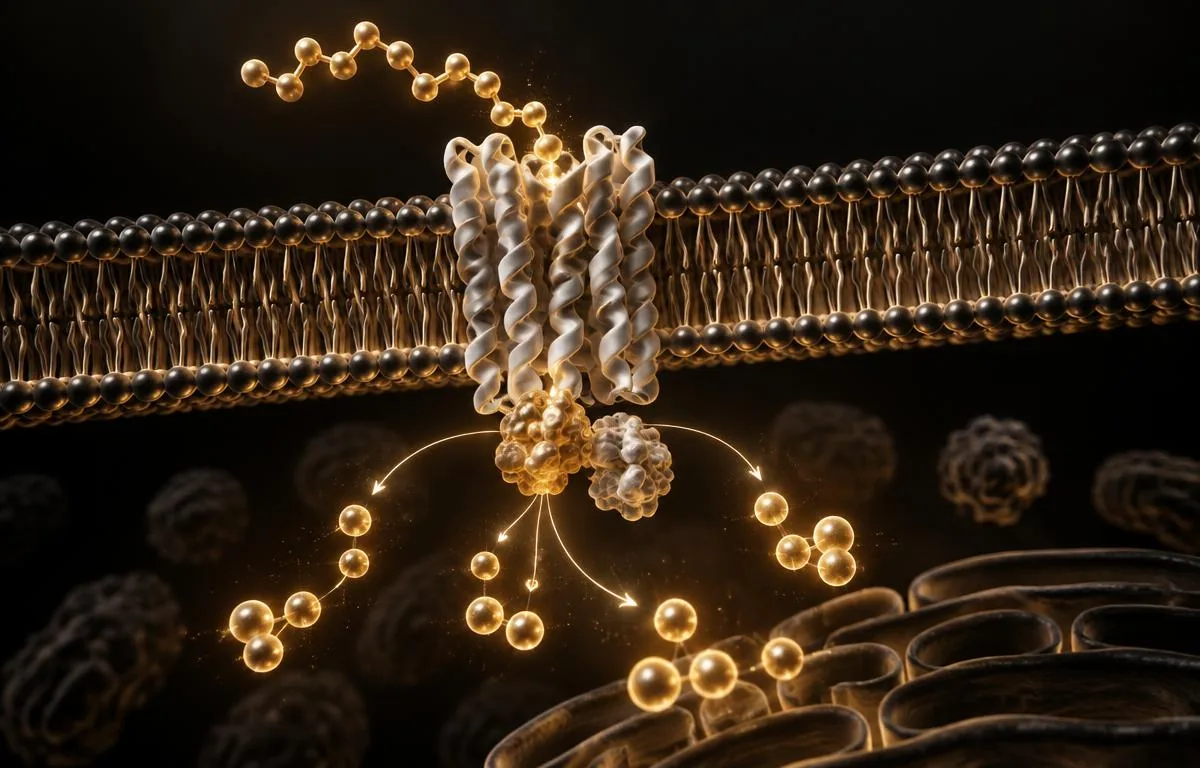
When a peptide binds a cell-surface receptor, the receptor changes shape. That conformational change is the message. For G-protein-coupled receptors (GPCRs) — the largest receptor family and the target of many natural peptide hormones — the activated receptor switches on intracellular G proteins, which in turn regulate enzymes that produce second messengers such as cyclic AMP (cAMP) or trigger calcium release.
Second messengers amplify the signal: one bound peptide can lead to thousands of intracellular messenger molecules. The cascade continues through kinases and other proteins until it reaches effectors — for example, transcription factors that change which genes the cell expresses. This is how a molecule that never enters the cell can change what the cell does.
Two quantitative ideas matter here. Affinity (often expressed as a dissociation constant, Kd) describes how tightly the peptide binds. Potency (often EC50 in a functional assay) describes how much peptide is needed to produce half the maximal measured response. A peptide can bind tightly yet produce a weak functional response, or vice versa, because binding and downstream signalling are separate steps.
See these principles applied to incretin pathways in Retatrutide vs. Tirzepatide: What Does the Research Say?, including why receptor profiles and clinical outcomes require separate interpretation.
4. Agonists, antagonists and partial effects
A peptide that binds a receptor and activates it is an agonist. One that binds without activating — and thereby prevents the natural ligand from acting — is an antagonist. Between these extremes sit partial agonists, which activate the receptor but cannot produce the full response even at saturating concentrations.
Researchers also distinguish orthosteric binding (at the same site as the natural ligand) from allosteric binding (at a different site that changes how the receptor responds). These distinctions are not academic: they determine what an experiment measures and how results should be interpreted.
5. Beyond receptors: enzymes and direct interactions
Not every peptide works through a receptor. Some peptides inhibit enzymes by occupying the active site or binding regulatory regions. Others interact with membranes directly — antimicrobial peptides, for example, can disrupt bacterial membrane integrity through physical mechanisms rather than a single protein target.
A further group acts as substrates or probes: researchers use labelled peptides to measure enzyme activity or to map binding sites. In these cases the peptide is a research tool, and its mechanism is the readout itself.
6. What happens next: breakdown and clearance
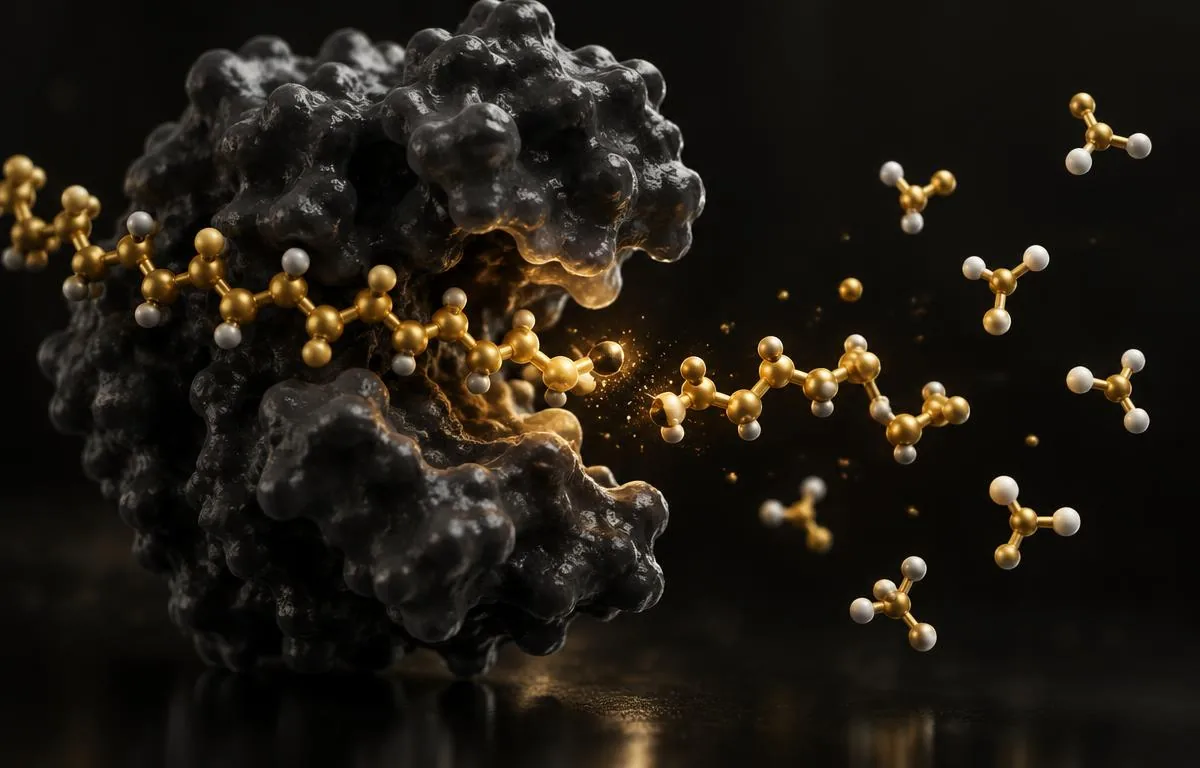
Biological systems are full of proteases — enzymes that cut peptide bonds. Most unmodified peptides are degraded within minutes to hours in blood or tissue, which is why peptide signals in nature are typically brief and local. Degradation products are shorter fragments and free amino acids, which the body handles through ordinary metabolism.
This instability shapes research design. Chemical modifications — D-amino acids, cyclization, terminal capping, lipidation — can slow proteolysis and extend a peptide's lifetime in an experiment. Each modification changes the molecule, however, and must be considered part of its identity when interpreting results or comparing batches.
7. Why mechanism research depends on material quality
A mechanism can only be studied if the material in the vial is what the label says. A truncated sequence, an oxidised residue or an unexpected counter-ion can change binding, potency or stability — and an impurity can produce an effect of its own. This is why analytical confirmation of identity and purity (for example by HPLC and mass spectrometry) is inseparable from any mechanistic claim.
HelixForge Research covers those analytical questions in depth in our articles on HPLC purity, mass spectrometry and Certificates of Analysis.
8. From mechanism to medicine: the evidence gap
A demonstrated mechanism is the beginning of a research question, not the end. Between a binding assay and an approved medicine lie cell studies, animal studies, pharmacokinetics, toxicology and controlled human trials — each able to show that a promising mechanism does not translate. Regulatory approval exists to test exactly this gap.
Content on HelixForge Research is educational. Research peptides are supplied strictly for in-vitro and laboratory research use and are not for human consumption.
Frequently asked questions
How do peptides work in the body?
Natural peptides act as signals: they bind specific receptors or interact with enzymes, triggering short-lived responses such as hormone signalling. They are then broken down by proteases into amino acids. Synthetic research peptides are studied in laboratory systems to understand these mechanisms, not for human use.
Do peptides enter cells?
Most peptides act from outside the cell by binding cell-surface receptors, because their size and polarity make crossing membranes difficult. Some specially designed or modified peptides can enter cells, but this is the exception rather than the rule.
Why does a peptide's amino acid sequence matter so much?
The sequence fixes the pattern of charges and chemical groups along the chain, which determines the peptide's shape and binding surface. Changing even one amino acid can alter folding, receptor binding or stability.
How long does a peptide's effect last?
In biological systems, most unmodified peptides are degraded by proteases within minutes to hours, so effects are typically brief. Chemical modifications can extend stability, which is one reason modified analogues are studied.
Does a proven mechanism mean a peptide is safe or effective in humans?
No. A laboratory mechanism is one early piece of evidence. Safety and effectiveness in humans can only be established through the full clinical and regulatory process.
References
- Peptide: Genetics Glossary, National Human Genome Research Institute
- G Protein–Coupled Receptors: Signalling and Regulation (StatPearls), NCBI Bookshelf
- Molecular Biology of the Cell, 4th edition: Signaling through Enzyme-Linked Cell-Surface Receptors, NCBI Bookshelf
- Designing Formulation Strategies for Enhanced Stability of Therapeutic Peptides, Pharmaceutics, 2023
Research Disclaimer. HelixForge Research content is for educational and informational purposes only. It is not medical advice and does not describe the safety or effectiveness of any product for human use. All HelixForge products are for research use only. See our scientific disclaimer and editorial policy.
Related research
Peptide Science
What Are Peptides? A Complete Guide to Understanding Peptides, Their Structure, Functions and Research
Learn what peptides are, how amino acids form peptide bonds, how peptides work, and how researchers assess identity, purity and laboratory documentation.
Peptide Science
Peptides vs. Proteins: What’s the Difference?
How chain length, folding and terminology distinguish two closely related families of amino-acid molecules.
Analytical Testing
What Is HPLC Testing? A Plain-Language Guide for Peptide Research
How high-performance liquid chromatography separates a sample, what a chromatogram shows, and where its limits are.
Contact the HelixForge Team
Let's Talk Science.
Have a question about an article or a topic you'd like us to explore? Say Hi to the HelixForge Team.
Stay Updated on Research
Receive research insights, scientific updates, and educational resources from HelixForge Research.